The Best Art-based Call for Entry Platforms in 2026

Which one should you choose?
In 2026, running art calls for submissions, whether for juried exhibitions, awards, open calls, residencies, or competitions, has moved well beyond simple forms and inboxes. If you’re running ad hoc calls with a handful of entries, maybe you can get by with a Google form and a PayPal link, but chances are, the proverbial wheels will soon be off, and your artists will be left frustrated and disappointed. The right platform acts as the backbone of your programme: collecting entries, coordinating jurors, handling payments, automating workflows, and providing the communication bridge between you and your applicants.
But with great power also comes great complexity (and responsibility, of course). Some platforms are simple and affordable but shallow in capability. Others are highly capable but priced for large institutions with deep pockets. What organisations really want is a sweet spot: easy-to-use workflows, modern features, a delightful UI and most importantly for 2026, affordable pricing.
Below is a snapshot of the leading art-based platforms in 2026, including how they work, who they’re best for, and where they might fall short.
The platforms
Call for Entry (CaCaFÉ
A long-standing submission management platform rooted in the arts world.
What it does well
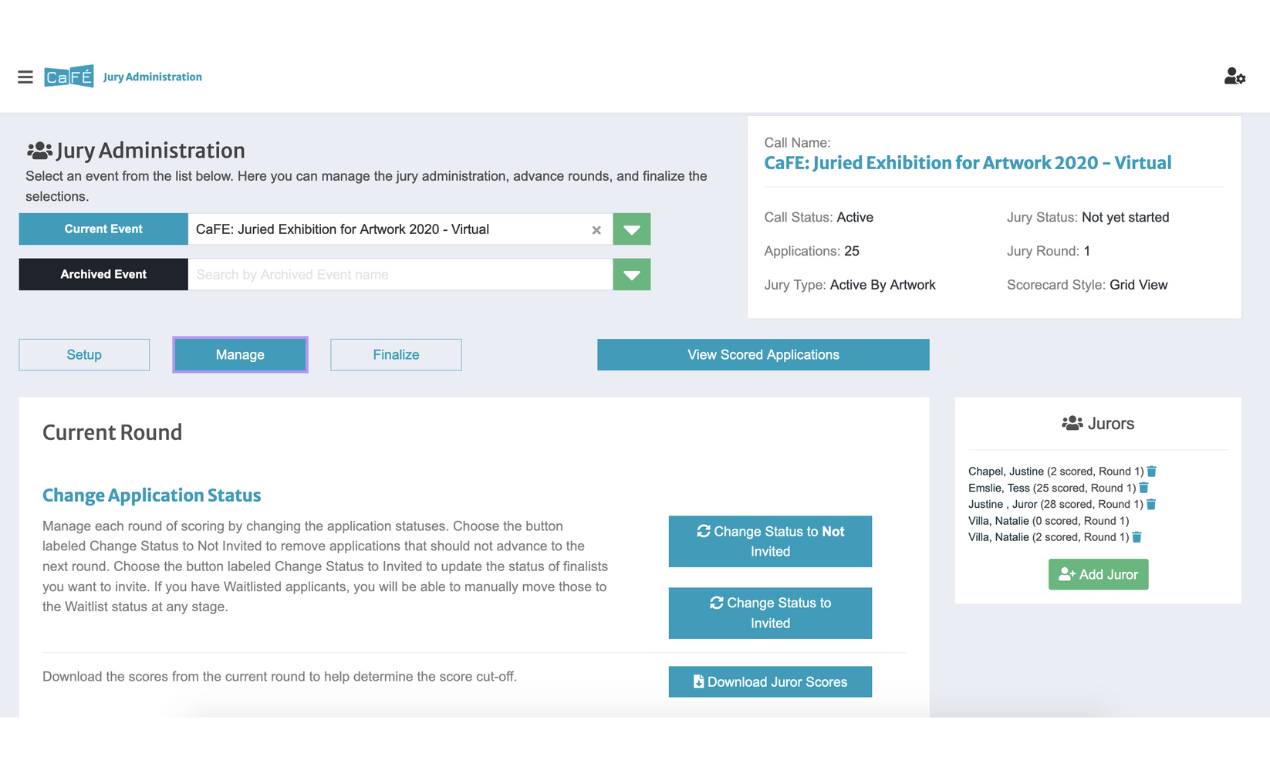
CaFÉ has been a go-to destination for arts organisations and artists alike for many years, offering a centralised way to collect entries, accept payments, and manage jury selections. It’s backed by a large network of organisations and artists and includes basic tools to handle submissions, deadlines, and juror evaluations.
Good for
Organisations seeking broad artist visibility and a platform with historical usage in the public art and museum sectors.
Where it can fall short
- Interfaces and workflows feel dated and clunky compared to newer tools.
- Feature depth (especially around automation, advanced analytics, and permissions) can be limited.
- Workflows are inflexible and can’t be customised.
- Pricing includes setup fees, per-call charges and renewal subscriptions that can add up quickly for frequent users.
Best suited to single calls or organisations that prioritise reach over workflow or management sophistication.
Submittable
The enterprise standard in submission and review workflows.
What it does well
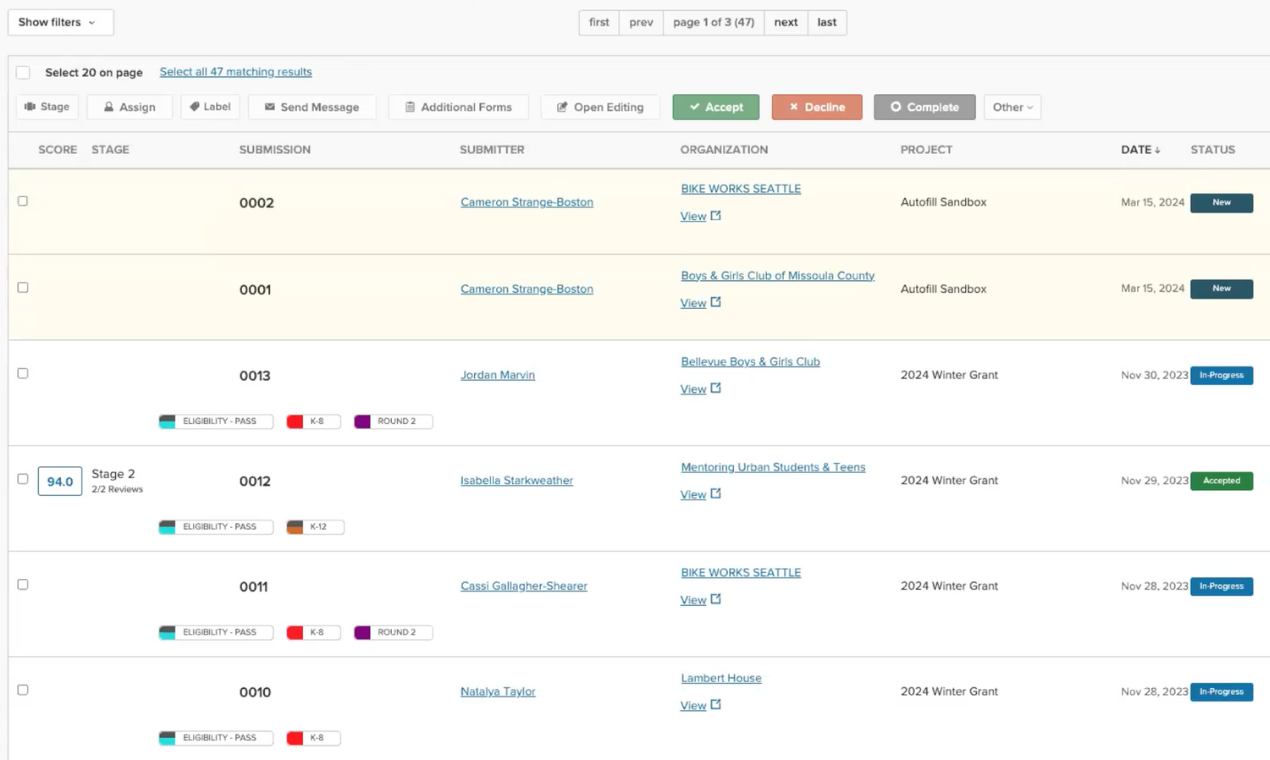
Submittable is widely used for grants, non-profits, corporate responsibility, employee giving, volunteering and social impact schemes. Its strengths include deep workflow control, powerful review and collaboration tools, custom forms, team management, and robust reporting features.
Good for
Large organisations with complex processes, many reviewers, and extensive submission volume.
Where it can fall short
- High cost and annual contracts starting at $10k.
- A focus on enterprise corporations outside of art or creative industries.
- High transaction fees (5% + $0.99) with no immediate payouts.
- Interface complexity can feel overwhelming for smaller teams.
Ideal for large organisations that require a suite of enterprise-grade features and have fewer budgetary constraints.
Dapple
Dapple bridges the gap between lightweight tools and heavyweight enterprise systems.
What it does well
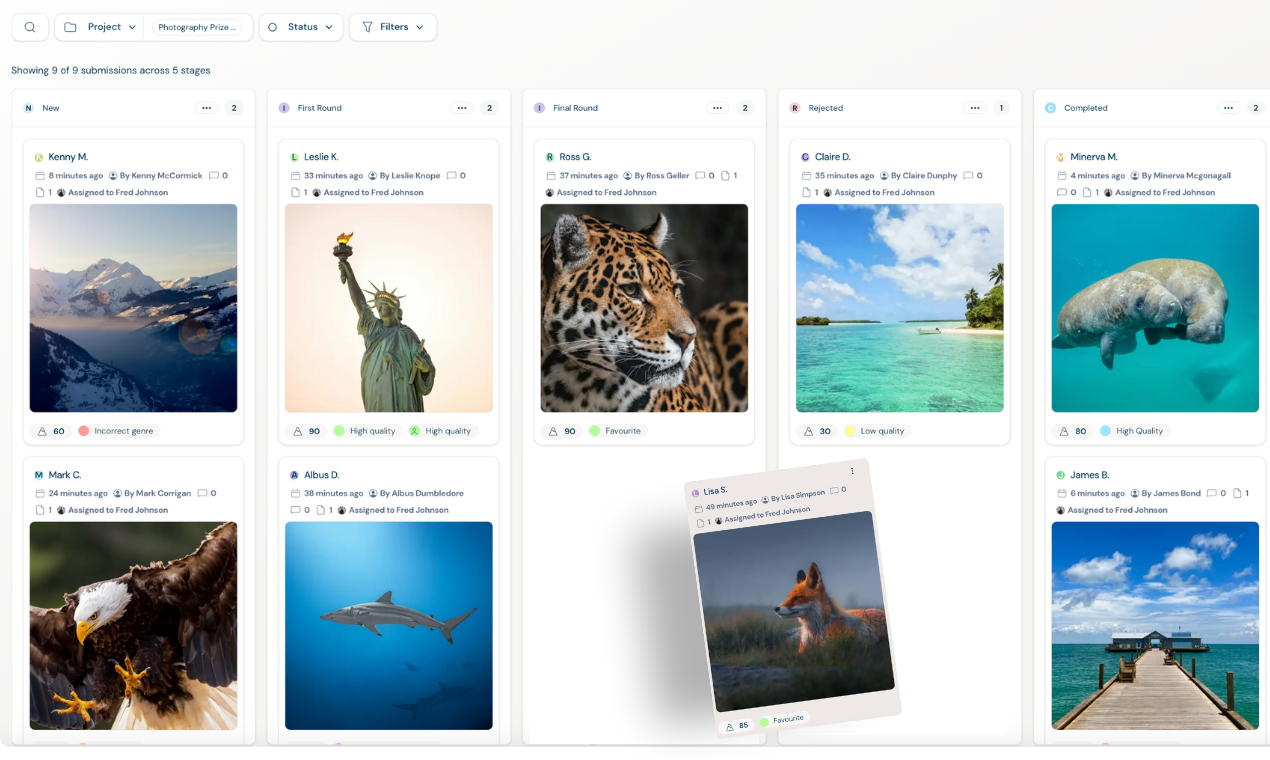
Dapple combines modern workflows with powerful feature depth to cater for a range of requirements from entries, applications, awards and contests. Its toolkit includes multiple simultaneous calls, richly customisable forms, advanced juried submission workflows, bulk actions and messaging, image-based gallery boards, a central analytics hub and numerous automations.
Good for
Creative organisations that need more sophistication than lightweight tools but want clarity and affordability compared with enterprise-priced systems. Prices start from as little as $35 per month and include 500 submissions.
Where it can fall short
- Feature-heavy for ultra-simple, one-off calls.
- No public voting.
- New and so lacks database reach.
A growing choice for organisations balancing capability, workflow customisations, and budget.
EntryThingy
A platform that focuses on simplicity and affordability.
What it does well
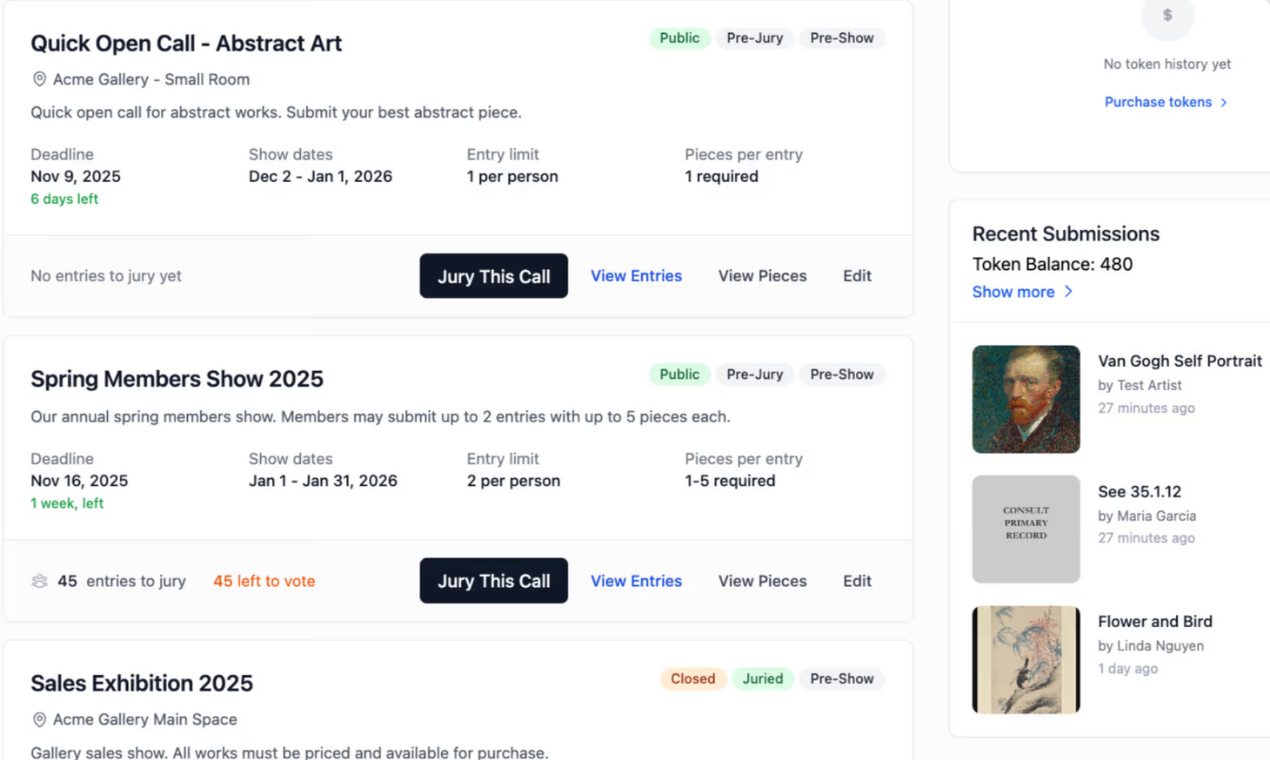
EntryThingy is built to help galleries and arts organisations collect entries quickly and manage jury review with clean tools. It supports embedded forms, multi-image uploads, direct payments, and basic jury scoring—all with transparent, per-submission pricing and instant PayPal deposits.
Good for
Small and mid-sized organisations that want a straightforward tool with predictable costs.
Where it can fall short
- Limited submission management feature set.
- No automations or analytics.
- Permissions and workflow complexity are basic.
- Best for fewer concurrent calls rather than large portfolios.
A solid choice for galleries and smaller programmes that want simplicity and basic features without surprise fees.
ShowSubmit
A focused platform for juried shows and exhibitions.
What it does well
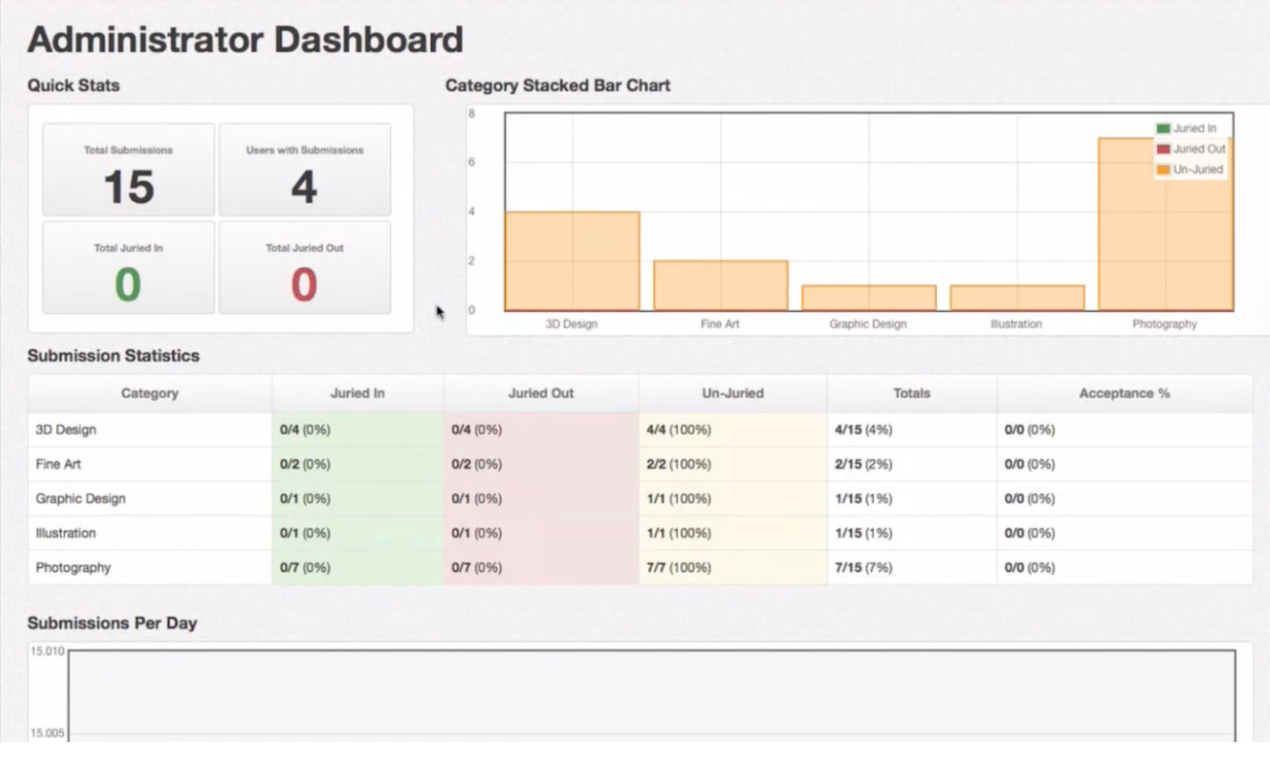
ShowSubmit’s interface is designed specifically for art exhibitions and similar shows. It streamlines submissions, jury notifications, and awards under one roof, and often surfaces accepted work in curated online galleries.
Good for
Organisations that run individual juried exhibitions and value a polished presentation alongside submission handling.
Where it can fall short
- The feature set is narrower compared to broader-scope tools.
- Not as strong for multi-call programmes or automation.
- Flat fees per call can add up if you run many calls per year.
Good for single seasonal shows or competitions where presentation matters.
Zealous
An awards management platform.
What it does well
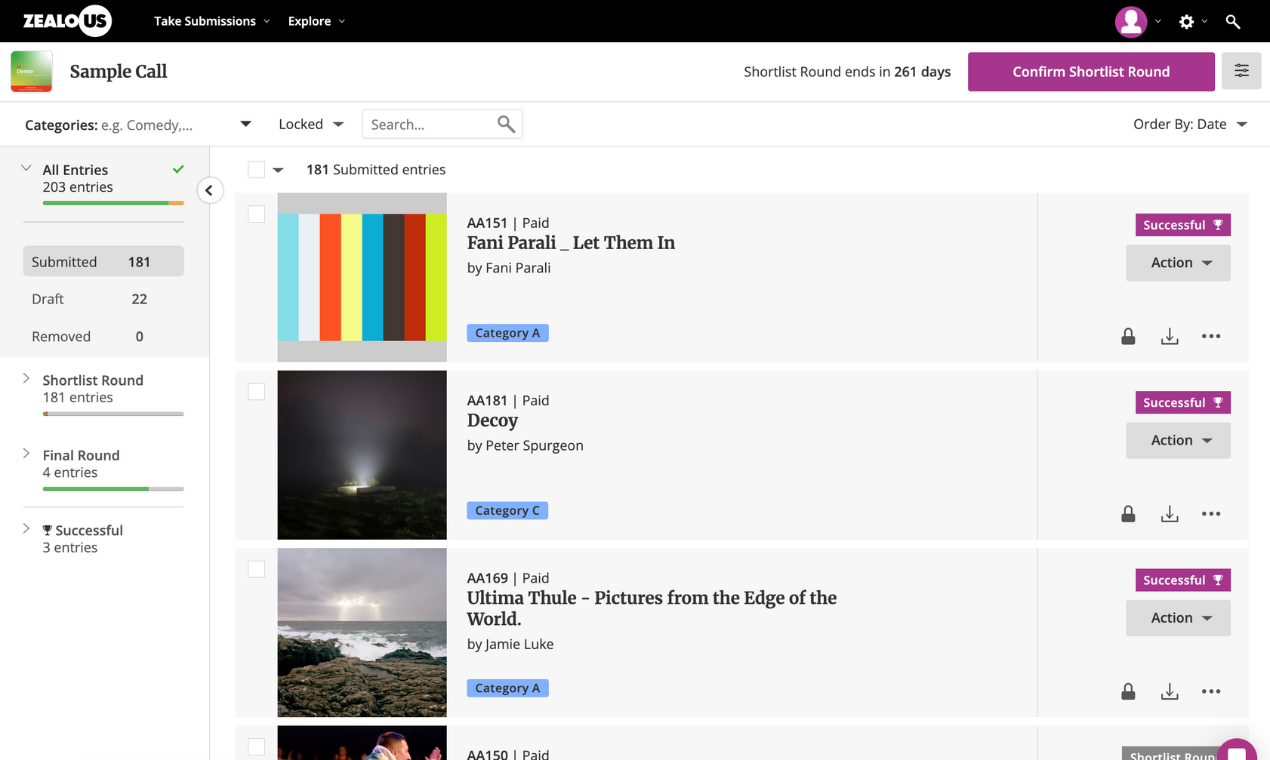
Zealous emphasises streamlined submission collection and intuitive judging panels. Its pricing is usage-based and designed to scale from smaller programmes up to major international opportunities without long-term contracts.
Good for
Organisations running competitions, awards, or large open calls with varied media types and public voting.
Where it can fall short
- Some advanced organisational features and analytics tools may feel lighter than enterprise systems.
- Awards focused with less flexibility for applications or general submissions.
- Not for those budget-conscious
- Limited workflow management and automations
Best for teams that value public voting, judge experience, and a focus on awards.
What will change in 2026
Thanks to the rise in technology, lots of creative orgs reported an increase in overall entries, applications and submissions in 2025, and the need to manage these became more acute. At the same time, budgets are being cut, and the cost of running a call is becoming more of a factor than ever before. Put simply, platforms need to offer more, move with current technology and do so at an affordable cost. And it isn’t just the number of features, it’s how those features work together. Modern expectations include:
- Running several calls at once
- Flexible, tailored entry forms
- Collaborative, transparent juror workflows
- Automations to cut repetitive admin
- Clear roles and permissions
- Analytics, data and visibility across projects
- Affordable pricing without surprises or complexity.
Conclusion
There’s no perfect submission platform for every organisation. But whether you’re a small gallery, a festival director, an awards organiser, or a museum curator, the choice you make now should reflect:
- Your budget and the number of submissions you expect to receive.
- Flexibility of workflow.
- Automation and analysis you need.
- Ease of use for both submitters and reviewers.
When you balance those practical needs with feature depth, the distinctions between platforms become clearer.
Learn more about Dapple
If you'd like to know more about Dapple and how this platform can help you, book a call in with our team below.